About this pathway
Background
Desflurane, enflurane, halothane, isoflurane, methoxyflurane, and sevoflurane are fluorinated inhaled anesthetics contraindicated in patients with variants in RYR1 and CACNA1S see CPIC guideline for volatile anesthetic agents and succinylcholine in the context of RYR1 or CACNA1S genotypes [Article:30499100]. These genes and variants are involved with the pharmacodynamics side effects of the drugs. Halothane, and to a lesser degree the other volatile anesthetics, have been associated with fatal hepatic necrosis [Article:18509326]. It is generally considered that the extent of metabolism correlates with the toxicity: halothane being the most extensively metabolized, then methoxyflurane > sevoflurane > enflurane > isoflurane > desflurane [Article:8214760].
Metabolism
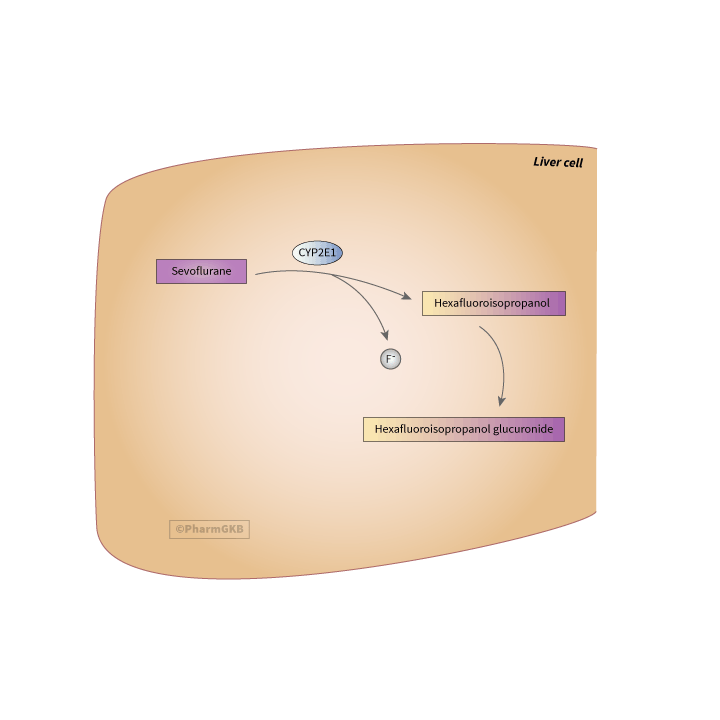
Sevoflurane is metabolized predominantly by CYP2E1 to form hexafluoroisopropanol (HFIP) and fluoride ions [Article:7486145]. Hexafluoroisopropanol is then glucuronidated (UGT enzymes not documented in PubMed to date)[Article:7486145]. Sevoflurane cannot undergo metabolism to an acyl halide and therefore is unlikely to form trifluoroacetylated liver proteins and cause the types of liver toxicity that occurs with halothane [Article:7486145]. It is more extensively metabolized than third generation inhaled anesthetics and therefore fluoride ion toxicity was an initial concern, however sevoflurane is considered optimal for procedures less than 2hrs, procedures requiring rapid changes in anesthesia concentration, or in patients at a higher risk for airway irritation from reactive airway disease [Article:26380072].
Reactions & interactions (3)
-
Biochemical Reaction
sevoflurane → fluoride + hexafluoroisopropanol
-
Biochemical Reaction
hexafluoroisopropanol → hexafluoroisopropanol glucuronide
-
Catalysis
CYP2E1 → Biochemical Reaction
Edit history (1)
- 2021-03-16 Create